Precision Processing
We select the process according to the required geometry and component tolerances.




At MAZOP, our technical foam processing capabilities include cutting, milling, die-cutting, heat welding, lamination and adhesive bonding. We combine different manufacturing technologies to create protective packaging and technical components tailored to product geometry and logistics requirements.
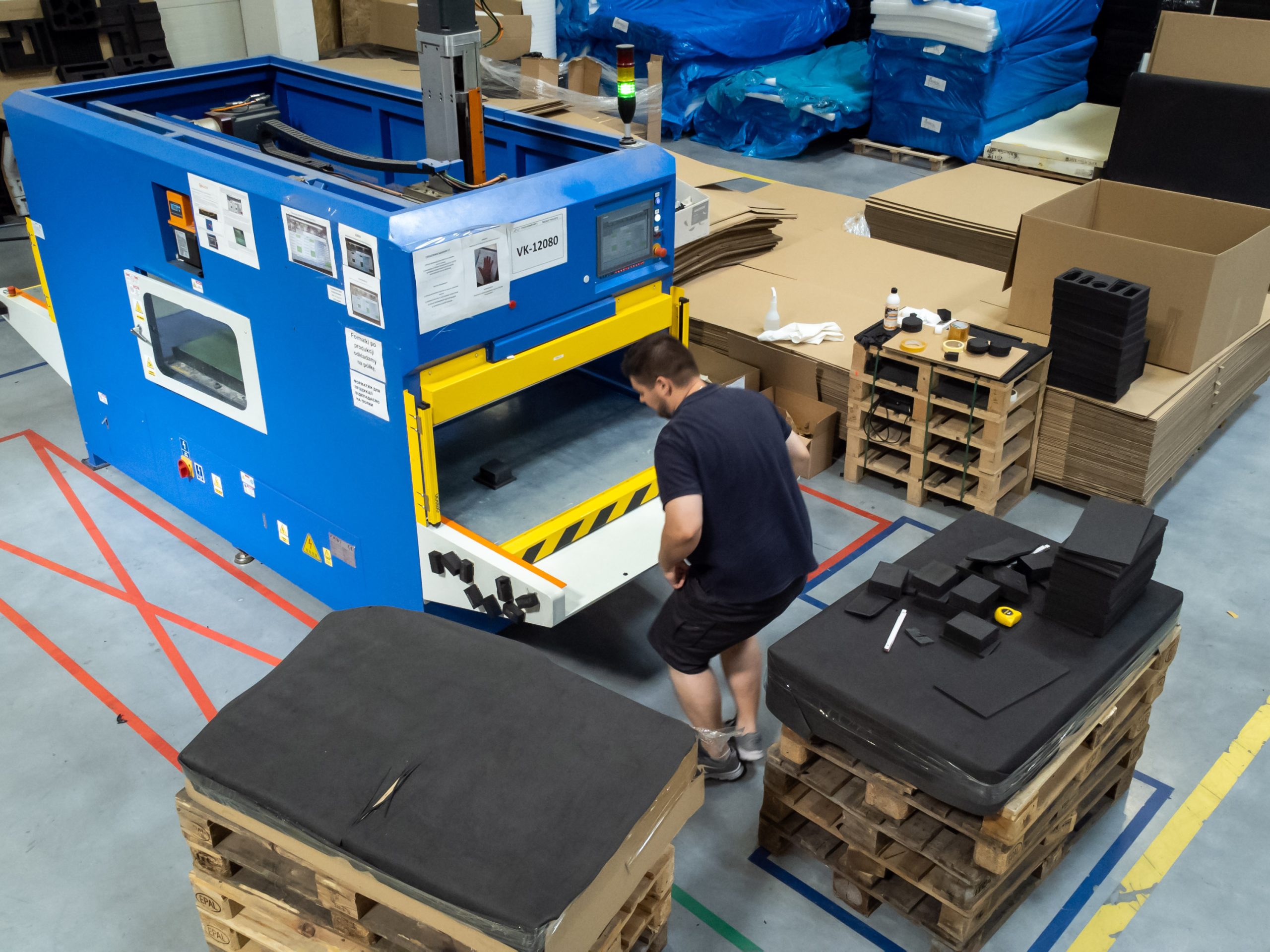
We select the process according to the required geometry and component tolerances.
We can validate a solution before production begins.
Controlled process parameters support repeatability across production batches.
A single component can be cut, milled, laminated and bonded.
Precision cutting of foam shapes based on digital design files. Suitable for prototypes, small production batches and complex contours.
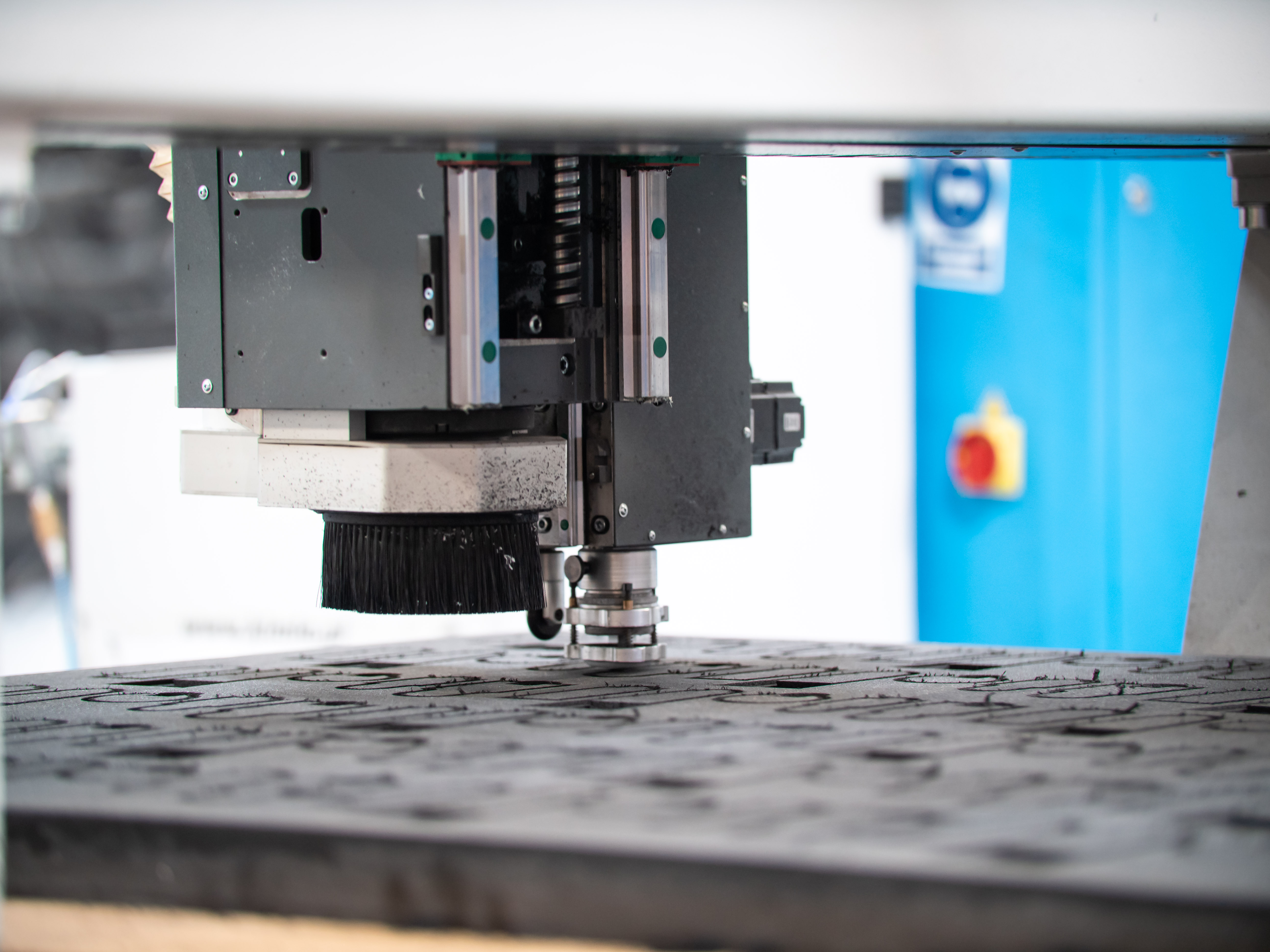
Processing foam components with irregular profiles, including three-dimensional shapes and custom-fitted protective elements.
Creating cavities, pockets and multiple depth levels in technical foam inserts and components.
Surface marking, position indicators, logos and identification details that support product organisation and component identification.
Cost-effective production of repeatable shapes in larger quantities, particularly for components with simple or moderately complex geometries.
Joining foam layers to achieve the required thickness, rigidity, material configuration or functional properties.
Bonding foam components, materials and layers into finished protective inserts, cushioning solutions and technical parts.
Adjusting material thickness to meet specific design, manufacturing and application requirements.
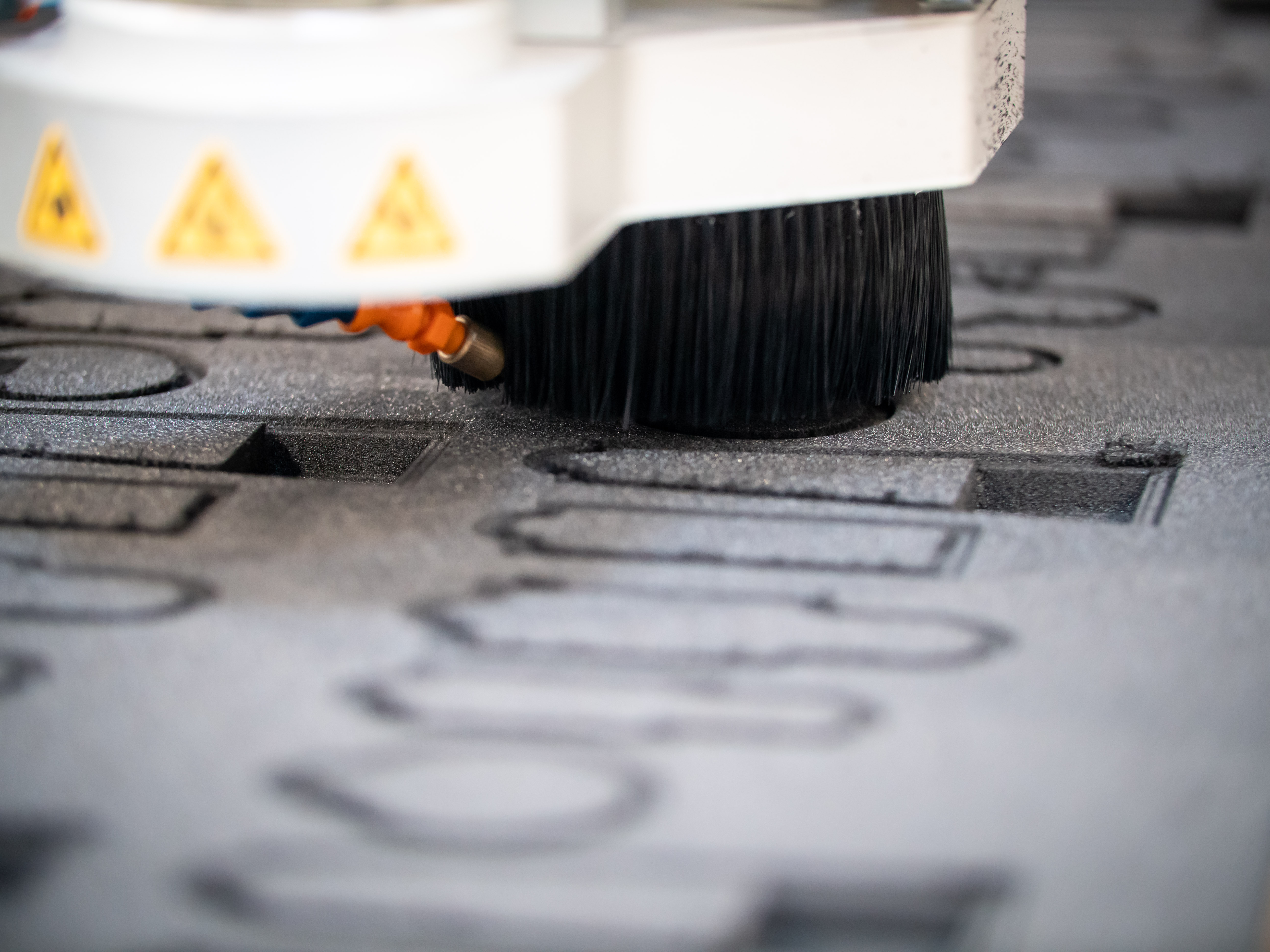
Depending on the material and component design, we select the manufacturing technology required to achieve the correct shape, depth, surface finish and joining method.
We consider material structure, density, elasticity and processing behaviour.
We analyse contours, depths, undercuts and the required product positioning.
We match the process to dimensional tolerances and surface finish requirements.
Different technologies may be selected for prototypes and series production.
We consider protection, organisation, presentation and long-term durability.
In practice, a finished foam component is often produced in several stages. The material may first be split to the required thickness, then milled, laminated, engraved and finally bonded.
We determine the most suitable sequence of operations to achieve the required durability, functionality and appearance of the finished solution.
We review geometry, materials, functionality and application requirements.
We choose the appropriate manufacturing process or combination of operations.
If required, we prepare a sample and validate the proposed solution.
We manufacture components according to the agreed volume and quality standards.
Send us a technical drawing, product dimensions or photographs. We'll help select the appropriate foam material and processing technology.